This continues the Panhandle Eastbound from Chicago Pt. 2 story covering the Penn Central era.
Conrail: The Story Ends
When Conrail began in April 1976, it continued the Penn Central operating plan for several years virtually unchanged. In June, one small adjustment was made to shift CO-8’s origin to the Belt Railway of Chicago’s Clearing Yard from 59th Street. With this change, Conrail now had Panhandle trains originating from four separate Chicago locations headed to the Panhandle: 59th Street, Colehour, IHB’s Blue Island, and BRC’s Clearing. All of the trains traded blocks at Hartsdale.
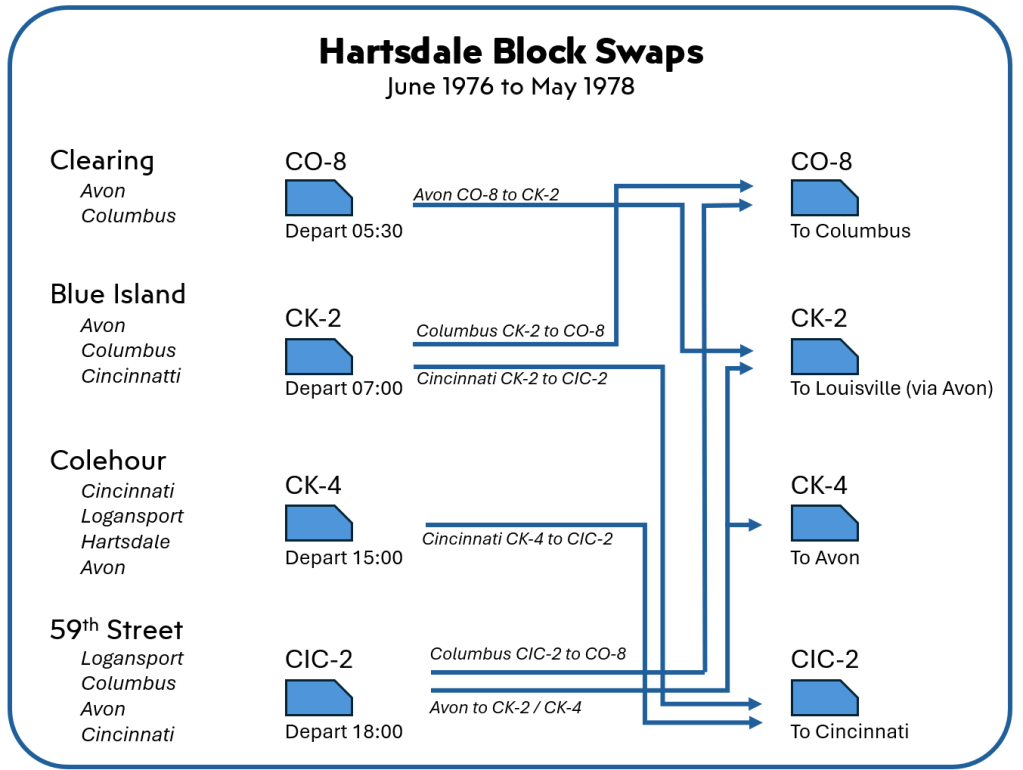
The Plan vs. Reality
Thanks to the North Judson tower sheets from August 1976 courtesy of Bert Zajac, we can compare closely actual operations reflected The Plan. The short answer is it varied by train.
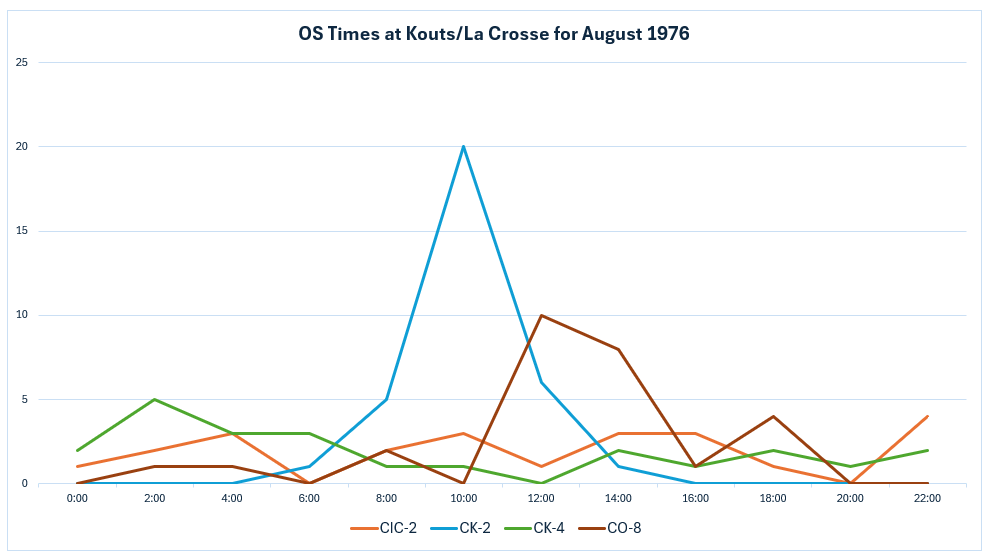
During August 1976, CK-2 from Blue Island was like clockwork. It was always in northwestern Indiana in the late morning. Though not quite as reliable, CO-8 from Clearing was often a couple hours behind CK-2. CK-2 ran every day that month except one (a few days in multiple sections), and CO-8 ran 27 out of the 31 days.
However, the former Pennsy yards did not perform as well. CIC-2 from 59th Street and CK-4 from Colehour both ran 23 days that month, and both could run at virtually any time of the day. CK-4 was slightly more likely to show up in the predawn hours as scheduled but it quite often didn’t. Pure speculation, but perhaps this more erratic performance from Conrail’s own Chicago yards foreshadowed the coming operational consolidation to Blue Island?
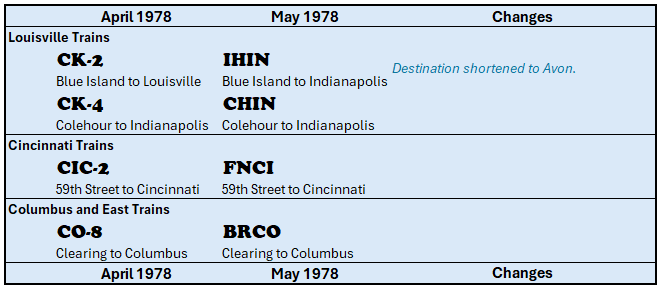
Conrail’s New Symbol System
In May 1978, Conrail introduced its new four letter alpha symbol system, replacing the inherited systems from the Pennsylvania and New York Central. The departure times of all four trains were changed, but otherwise operations continued basically as before. The former CK-2, now IHIN, was shortened to terminate at Avon instead of Louisville, but CK-2 had always been entirely reclassified at Avon, so this change was nominal.
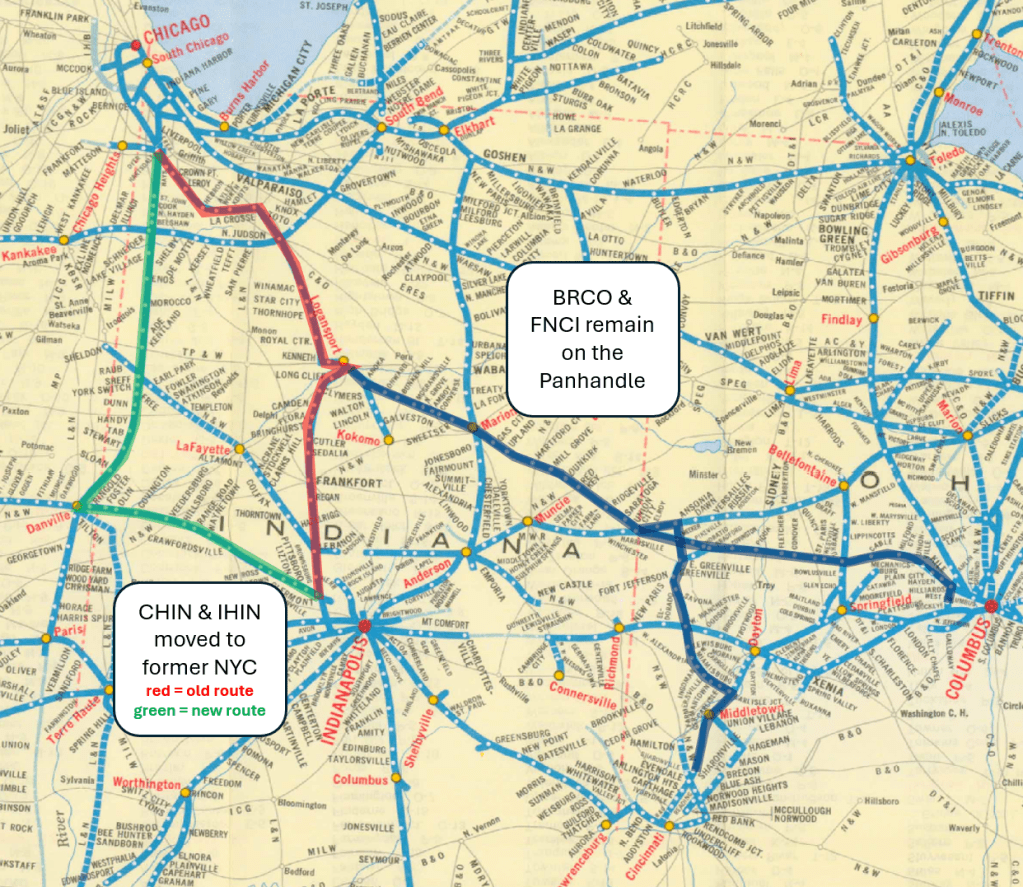
The Axe Falls
The ringing of the 1979 New Year was not a kind one for the Panhandle, as at that time CHIN from Colehour and IHIN from Blue Island to Avon were both shifted to a former NYC Danville Secondary routing out of Chicago, leaving just BRCO and FNCI to use the Panhandle. And these trains would not survive the year.
On September 27, 1979, the era of eastbound symbol freights from Chicago ended. FNCI and BRCO were both abolished, replaced by new IHCO from Blue Island. However, this train was routed via Elkhart to Marion, IN, a circuitous routing that allowed picking up at Elkhart enroute. This also represented the end of 59th Street Yard. In a dramatic cleansing of all things Pennsy, by December the CHIN from Colehour would also be abolished, and both yards gone from the Yard Classifications listing.
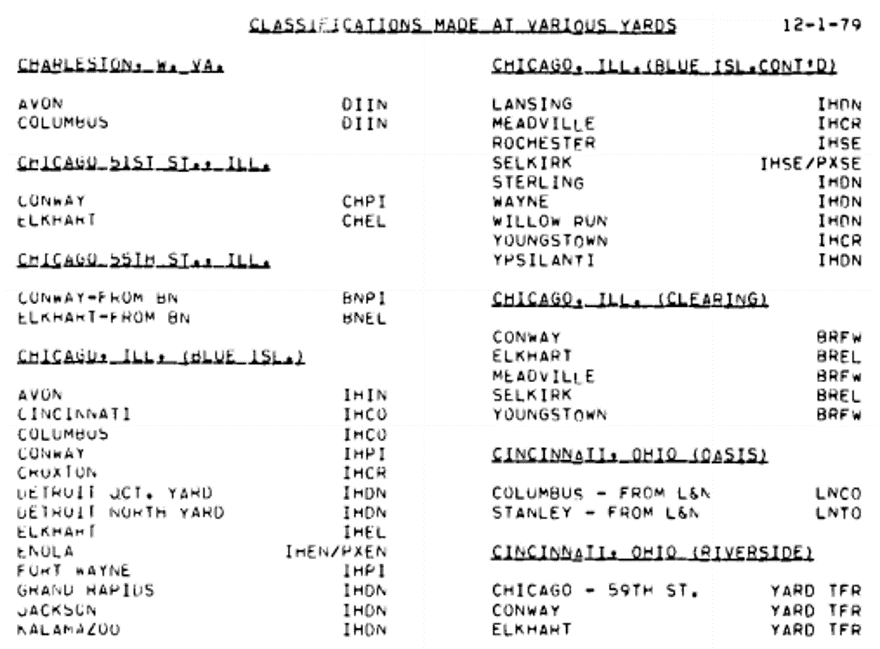
There remained still one unlikely survivor. Local LD-7/LD-8 based out of Colehour continued to work to Crown Point and stoically held on to their old Pennsylvania symbols. But a few months later, in April or May 1980, it would be shifted to Hartsdale and renamed WCH-1/WCH-2, and the purge would be complete.
Epilogue
The simplification of Conrail’s route structure continued. By 1984, IHIN was abolished; all Avon traffic would route via Elkhart, and there were no longer any manifests from Chicago headed south or southeast on any route. Blue Island also dropped its Columbus and Cincinnati classifications; this traffic would move via Toledo. The Belt Railway of Chicago’s Clearing Yard also decreased in importance, declining to a single Elkhart train. What was once a myriad of origins, classifications, and trains out of Chicago on several different railroads had been reduced to basically a single yard serving a single route and building a mere 10 blocks.
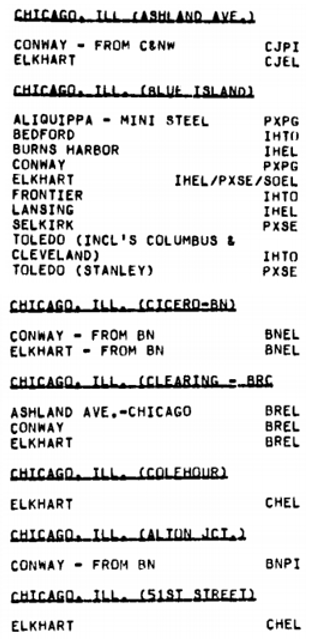
And, finally, the inevitable end. I don’t have the exact abandonment date, but the Panhandle was just a blank space on the Conrail 1984 system map.

Many Thanks
It takes many generous people sharing information to make this effort possible. Special thanks to Bert Zajac for the North Judson tower sheets and the inspiration for this project. Thanks also to Multimodalways.org for their nearly complete Conrail freight schedule collection and to Allen Stanley and his Rail Data Exchange. And much gratitude to the many others that shared information in different forms and forums that allowed me to find answers to the innumerable questions that came up.
Corrections are welcome, and I’d love any additional information. And if you have your own trove of information, please consider making it available; every little bit helps put together the puzzle and preserve the legacy of those people and trains that have already passed.
 Moving the Freight